
By PW Maines on Aug 4, 2026, 11:00:01 AM
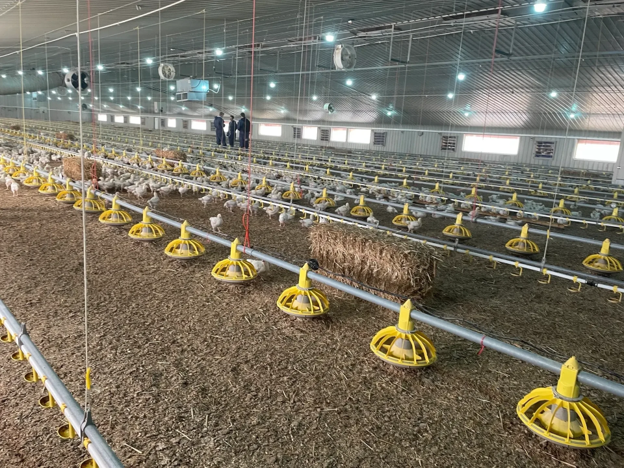
Modern poultry farming demands a level of consistency and precision that's increasingly difficult to achieve through manual management alone. As flock sizes grow, energy costs rise and welfare standards tighten, the case for poultry automation systems has moved from being a forward-thinking option to a practical necessity for farms serious about staying competitive.

What Poultry Automation Actually Does
It's worth being clear about what automation means in a poultry farming context, because it covers more ground than many farms initially expect. Modern environmental control systems and poultry automation systems help maintain more stable poultry house conditions by regulating temperature, airflow, CO2 levels, humidity, water supply, and feed control throughout the day with minimal manual adjustment. Rather than relying on staff to identify when conditions have shifted and respond accordingly, automated systems monitor continuously and adjust in real time.
The practical effect of this is a shed environment that stays within tighter parameters than manual management typically achieves, not because staff aren't capable, but because no human monitoring schedule can match the consistency of a system that never stops watching.
Modern poultry automation systems can help manage:
- Temperature and environmental control
- Ventilation and airflow
- Humidity and CO₂ levels
- Feeding and drinking systems
- Environmental monitoring and alerts
Real-Time Monitoring Changes How Farms Respond
Automated poultry farming systems improve environmental monitoring in ways that fundamentally change how farms can respond to problems. Modern systems provide real-time monitoring of poultry house conditions, helping farms respond more quickly to environmental changes before they escalate into welfare or performance issues.
This shift from reactive to proactive management is one of the most significant practical benefits automation delivers. A temperature spike that might go unnoticed between manual checks can be identified and corrected within minutes by an automated system, reducing the window in which birds are exposed to suboptimal conditions. Barn automation helps reduce manual workload while supporting more consistent poultry house conditions and bird performance.
Efficiency Gains In Day-To-Day Management
Poultry automation helps improve farm efficiency and daily management by reducing the need for constant manual intervention and supporting more consistent poultry house operation. For operations leads managing multiple sheds or sites, this makes a huge difference. Time spent on routine manual checks and adjustments is time that can't be spent on higher-value management tasks, and the cumulative burden of manual oversight across a large operation adds up quickly.
Automation doesn't eliminate the need for skilled farm management. What it does is remove a significant portion of the repetitive monitoring workload, freeing staff to focus on situations that genuinely require human judgement rather than routine observation. It can also simplify staff training by reducing the need for constant manual monitoring and routine environmental adjustments. This gives staff more time to focus on flock management, maintenance, and other higher-value operational tasks.
For poultry farms, this can help:
- Reduce manual monitoring and routine adjustments
- Improve consistency across multiple poultry houses
- Respond more quickly to changing environmental conditions
- Support bird welfare through stable house conditions
- Improve overall farm efficiency
Ventilation And Air Quality Management
Automation systems help improve ventilation and air quality management in ways that manual systems struggle to replicate consistently. Poultry automation systems can automatically adjust ventilation rates to maintain more stable air quality and shed conditions, responding to changes in CO2, humidity, and temperature simultaneously rather than addressing each factor independently.
Modern poultry automation systems can help:
- Automatically adjust ventilation rates
- Monitor temperature, humidity, and CO₂ levels
- Maintain more consistent air quality
- Respond quickly to changing shed conditions
- Support healthier poultry house environments
This integrated approach to air quality management is particularly valuable during periods of rapid environmental change, such as early morning temperature shifts or the heat build-up that occurs as a large flock becomes active during the day. A system managing these variables together tends to produce more stable outcomes than one addressing them sequentially or in isolation.
Supporting Welfare Through Consistency
Automated poultry farming systems support bird welfare and flock performance by maintaining the kind of environmental consistency that's difficult to achieve any other way. More consistent poultry house conditions help reduce stress on birds and support healthier flock environments, and the welfare benefits of this consistency compound over the course of a full grow-out cycle.
Birds raised in stable, well-managed environments from placement to harvest tend to perform more reliably than those exposed to fluctuating conditions, even when individual variation in those conditions seems minor.
Hotraco, Tecno, And Fortica Max
For farms considering automation, Hotraco poultry systems such as the Fortica Max represent the current standard in integrated environmental control. The Fortica Max supports smarter poultry farm automation by helping farms improve monitoring, automation, and day-to-day management from a single platform. Paired with iHotraco Farm Manager, it delivers a complete, secure, and real-time data environment that gives farm owners and operations genuine visibility across their operation.
Tecno poultry systems also provide comprehensive systems to give hens comfortable enclosures and cleaner eggs. Their systems support free range egg production and are designed to give birds complete freedom of movement to go outside and peck in the open air.
Improve Efficiency Through Poultry Automation
Modern poultry automation systems help poultry producers improve environmental control, reduce manual workload, and maintain more consistent poultry house conditions. Reviewing your current automation and environmental control systems can help identify opportunities to improve monitoring, flock management, and overall farm efficiency.
Looking to improve poultry house efficiency and environmental control? Request a site visit from the PW Maines team to discuss how poultry automation systems can support your poultry automation goals and improve day-to-day farm management.
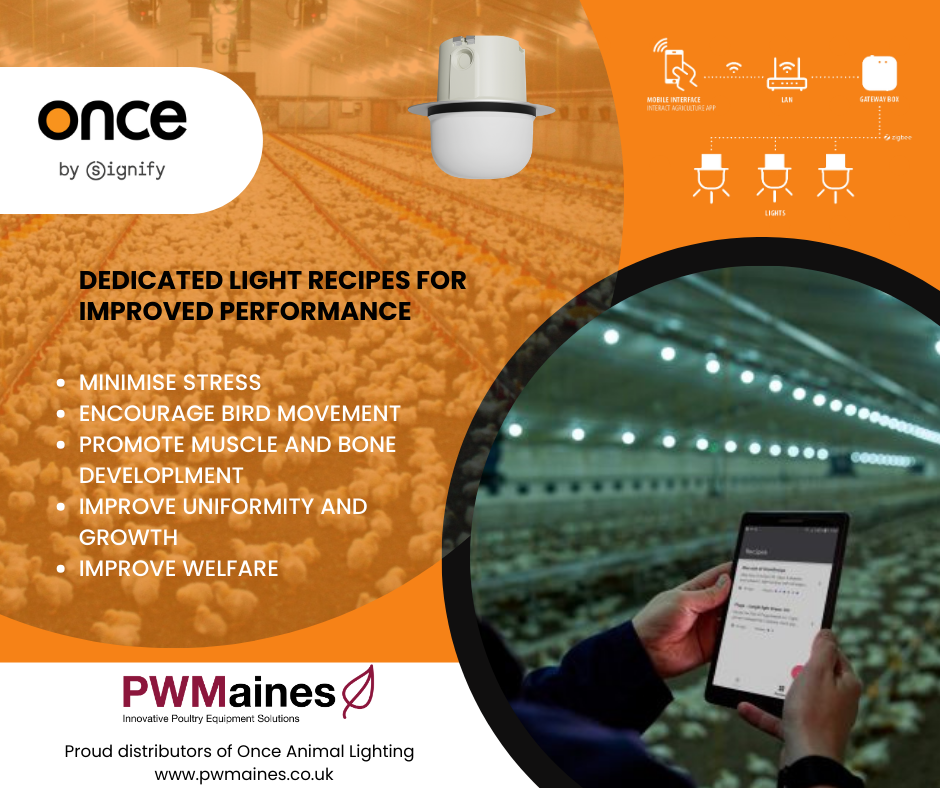
Lighting Recipes – Webinar by Once Animal Lighting

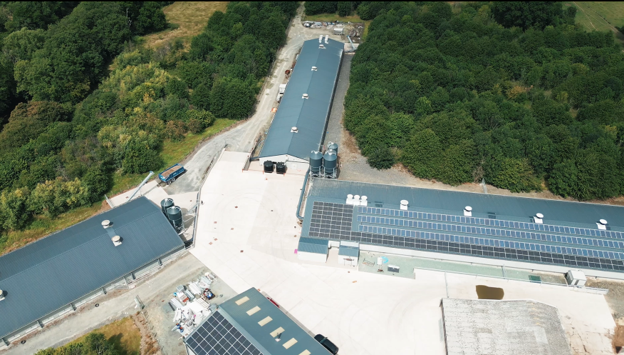
Visit to Tecno – Providers of Smart Poultry Farming Solutions
No Comments Yet
Let us know what you think